
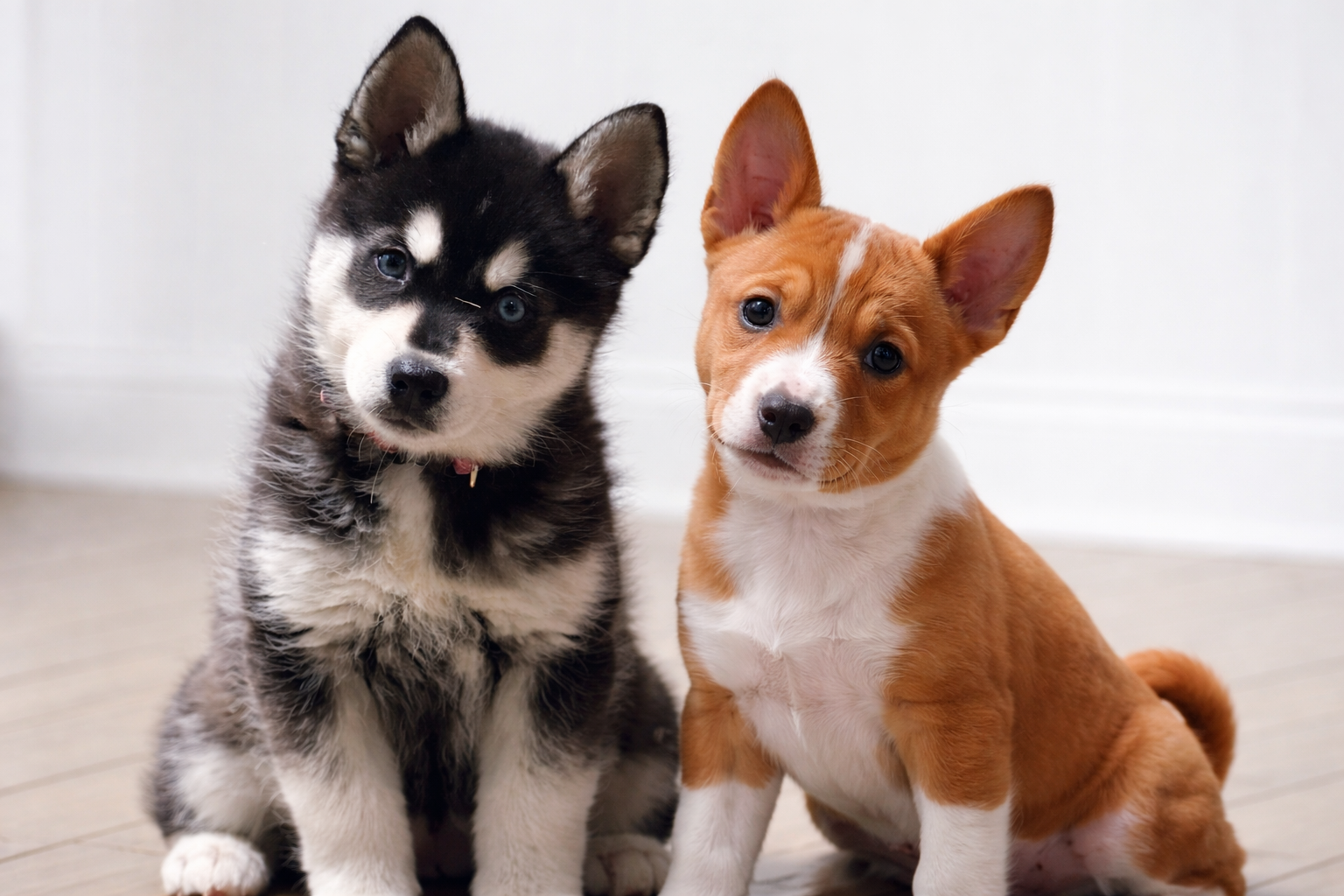
Basenji Health Overview
Basenjis are generally a healthy and long-lived breed. Responsible breeding, modern DNA testing, and health screening have significantly reduced the occurrence of serious inherited diseases. Reputable breeders prioritize transparency and testing to protect the future of the breed.
Fanconi Syndrome
Fanconi Syndrome is a kidney disorder affecting the reabsorption of nutrients and electrolytes.
- DNA test available
- Untreated cases can lead to muscle wasting and metabolic issues
- Early detection and treatment using the Gonto Protocol often allows a normal lifespan
- Affected or Carrier dogs should only be bred to Clear dogs, and only when preserving valuable genetics
Progressive Retinal Atrophy (PRA-BJ1)
PRA causes progressive vision loss and eventual blindness.
- DNA test available
- Late onset — testing before breeding is essential
- Preferred breeding: Clear to Clear
- Carriers should only be bred to Clears
DNA Testing Explained
Fanconi and PRA results are classified as:
- Clear/Normal – Dog does not carry the mutation
- Carrier – Dog carries one copy but will not develop the disease
- Affected – Dog has two copies and is at risk of developing the disease
Responsible breeders list results publicly (OFA preferred) and make documentation available to puppy buyers.
Eye Health & PPM
Basenjis can develop hereditary eye conditions during their lifetime.
- Ophthalmology exams should begin around 7 weeks
- Annual exams by an ACVO board-certified ophthalmologist are recommended
- Eye certification results should be available to buyers
Persistent Pupillary Membrane (PPM) is common and usually mild. It does not progress and often improves as puppies mature.
Hip Dysplasia
Hip dysplasia is rare in Basenjis. Screening through OFA or PennHIP is recommended. Results should be available to prospective owners.
Hypothyroidism
Occurs in a small percentage of Basenjis and may result from autoimmune thyroiditis. OFA thyroid testing is recommended. Dogs with autoimmune thyroiditis should not be bred.
Hernias
- Umbilical hernias: Common and usually minor; often repaired during routine procedures.
- Inguinal hernias: Uncommon but serious; affected dogs should not be bred.
Our Commitment: We utilize DNA testing, eye certifications, and health screenings to responsibly protect the Basenji gene pool while preserving sound structure and temperament.
Alaskan Klee Kai Health Overview
The Alaskan Klee Kai is generally a healthy, long-lived breed. Responsible breeders screen breeding stock for known health conditions to reduce inherited disease and produce sound puppies. Prospective owners should always review health testing documentation for both parents.
Patellar Luxation
Patellar luxation (a kneecap that slips out of place) can occur in small breeds.
- May cause intermittent limping or an abnormal gait
- Mild cases may be managed medically; severe cases can require surgery
- Breeders often have patellas evaluated by a veterinarian
Autoimmune Thyroiditis / Hypothyroidism
Some dogs may develop thyroid disease, including autoimmune thyroiditis and hypothyroidism.
- Signs can include weight gain, lethargy, and coat or skin changes
- Diagnosed via bloodwork and managed with medication
- Thyroid screening is commonly recommended for breeding stock
Cardiac (Heart) Screening
Heart murmurs or congenital cardiac issues can occur in some lines.
- Veterinary cardiac exams can detect and monitor murmurs
- Breeders may provide documentation of cardiac screening
Factor VII Deficiency
Factor VII deficiency is an inherited blood-clotting disorder that can impact normal clot formation.
- Affected dogs may bleed excessively after trauma or surgery
- Genetic testing may be available depending on lab offerings
- Responsible breeding aims to avoid producing affected puppies
Eye Health
Eye conditions, including juvenile cataracts and other hereditary concerns, may occur in the breed.
- Routine eye examinations can help detect issues early
- Breeders may provide eye screening results when available
Liver and Other Health Concerns
As with many breeds, some individuals may develop liver or other systemic issues.
- Routine veterinary care and periodic lab work can help monitor overall health
- Contact your veterinarian promptly for signs like vomiting, lethargy, appetite loss, or jaundice
Hernias
Umbilical hernias can occur and are often minor.
- Many are repaired during spay/neuter
- Discuss severity and implications with your veterinarian and breeder
Our Commitment: We utilize DNA testing, eye certifications, and health screenings to responsibly protect the Alaskan Klee Kai gene pool while preserving sound structure and temperament.
Health Testing and Responsible Breeding
Reputable breeders often complete a combination of orthopedic exams, thyroid testing, cardiac screening, eye evaluations, and genetic testing when appropriate. They should be able to explain their program, share results, and discuss how pairings are chosen to support long-term breed health.